

Ownbit Blog
Security insights, MultiSig practice, and self-custody thinking from the Ownbit team.
Bitcoin inheritance planning: a practical guide
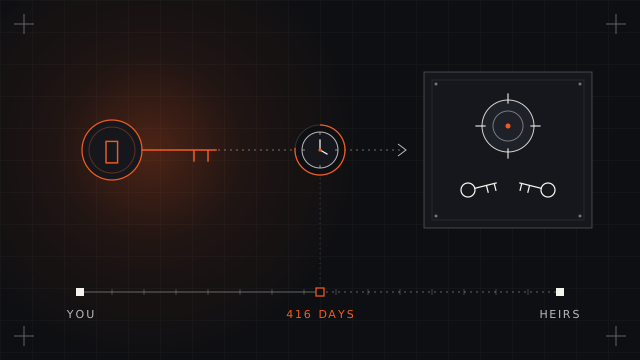
Keys nobody else can touch are keys nobody else can inherit. The three tests a plan must pass, six options compared honestly, and a 416-day multisig handover your heirs can actually execute.
Wallet entropy: what the Coldcard incident teaches about randomness
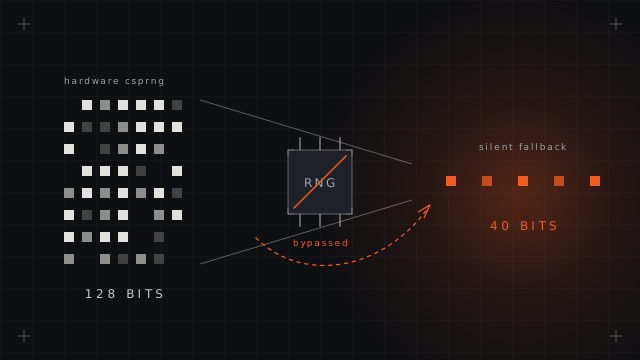
Roughly $38M in BTC was swept from wallets whose seeds only looked random — a firmware flaw from 2021 had quietly weakened them. How entropy fails silently, and how to defend against the whole bug class.
Casa vs Ownbit for crypto inheritance: an honest comparison
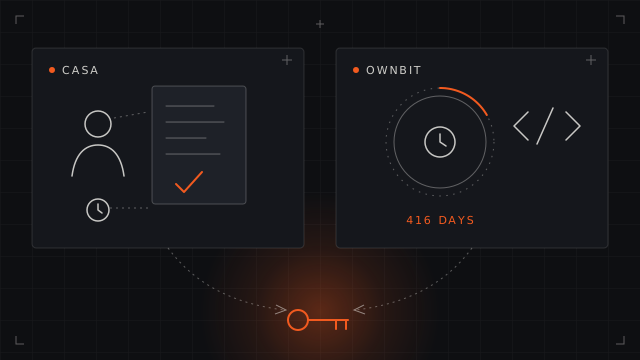
Both use multisig so heirs never touch your seed phrase — then they part ways: Casa verifies death through a human process; Ownbit enforces a 416-day timer on-chain. Which trust model fits you.
Turn a spare phone into a cold wallet
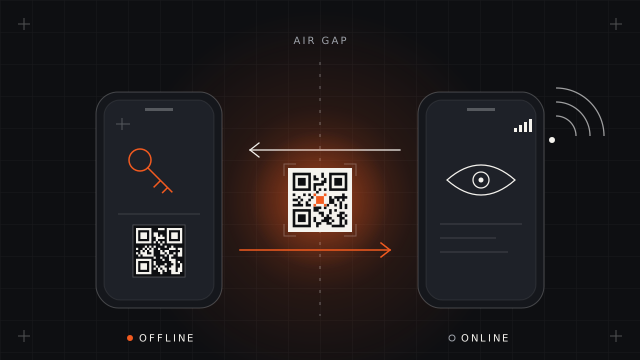
The phone in your drawer can do what a hardware wallet does: keep keys on a device that never touches the internet, and sign transactions that cross the gap as QR codes. A practical setup guide.
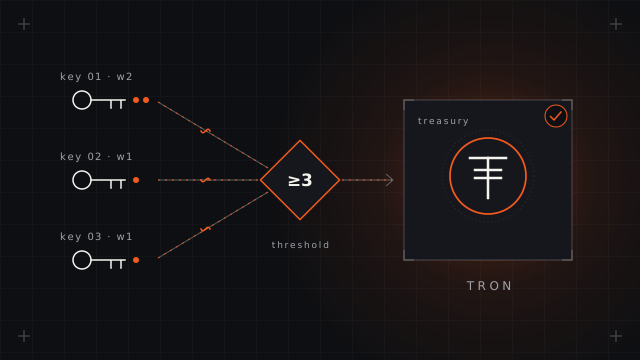
Running a USDT treasury on TRON with MultiSig
TRON settles more USDT than any other network, and TRON multisig is native at the protocol level. How to structure roles, thresholds, and daily operations for a stablecoin treasury.
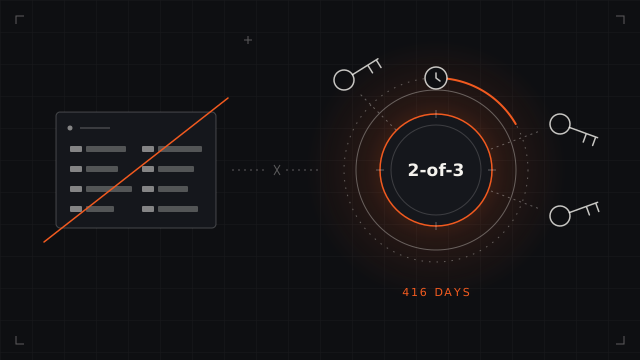
How to pass on your crypto without sharing a seed phrase
Handing your heir a copy of your seed phrase creates a live risk today to solve a problem that arrives decades from now. Inheritance MultiSig separates the two — heirs hold keys, not your keys.
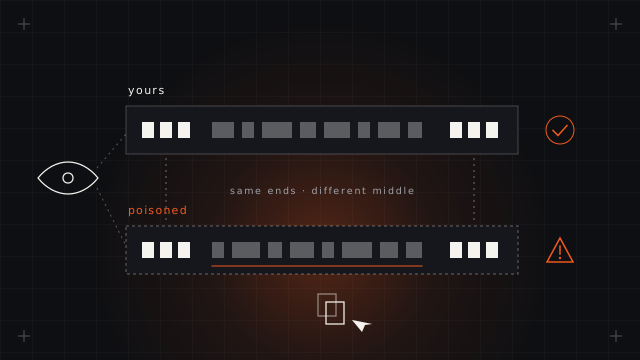
Address poisoning: the scam that preys on copy-paste
Attackers seed your history with look-alike addresses and wait for one careless paste. In May 2024 a single mistake sent roughly $68M of WBTC to a poisoned address. How the scam works and how to kill it.
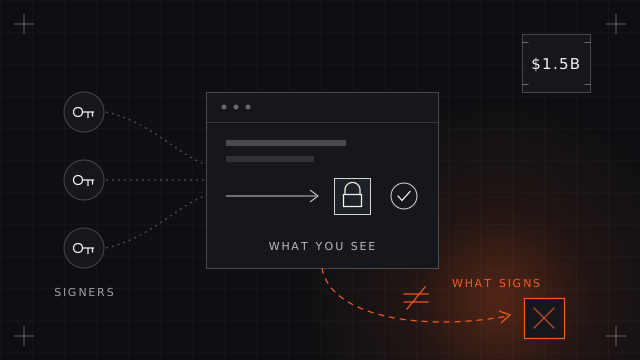
Lessons from the Bybit hack: signing UX is multisig’s weakest link
Roughly $1.5B in ETH left a multisig cold wallet after signers approved what they believed was a routine transfer. The keys held; the signing experience didn’t. What blind signing really costs.
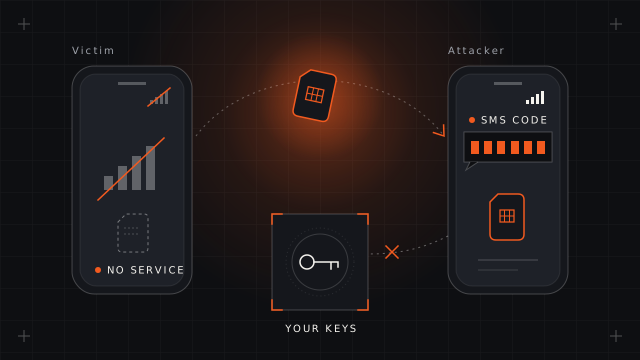
SIM swap attacks: your phone number is not your identity
In January 2024, the SEC's own X account was hijacked through a SIM swap. If a carrier support desk can reassign your number, nothing guarded by SMS is really yours.
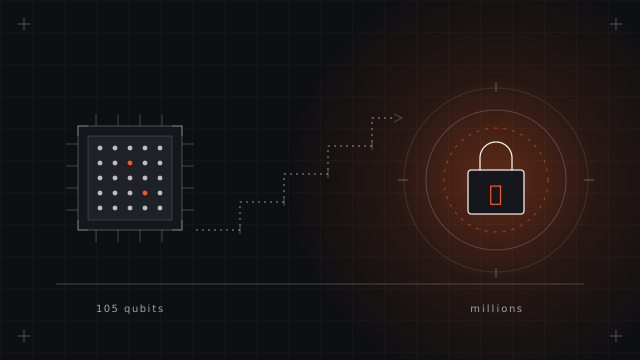
Google’s Willow chip and Bitcoin: how close is the quantum threat?
Willow demonstrated below-threshold error correction on 105 physical qubits — a real milestone that still leaves cryptographically relevant machines orders of magnitude away. A sober read.
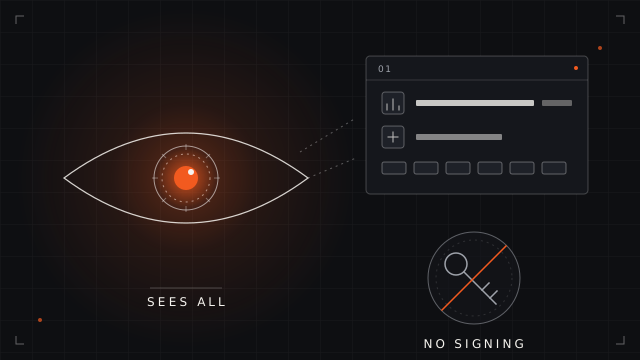
Watch-only wallets, explained: see everything, sign nothing
A watch-only wallet holds addresses, not keys: it can show balances and build transactions but can never spend. Why that split is the backbone of every serious cold-storage setup.
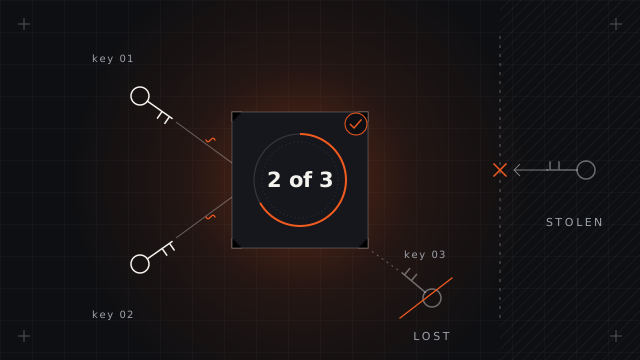
Why 2-of-3 multisig is the sweet spot for personal custody
One key can be lost AND one key can be stolen, and your coins survive both. Why the 2-of-3 threshold hits the balance point between security and survivability — and how to place the keys.
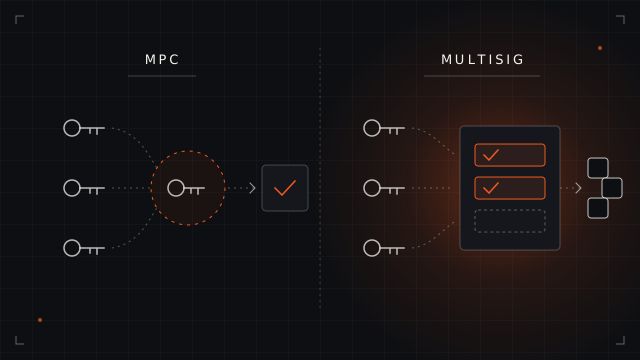
MPC vs MultiSig: an honest comparison
Both split signing power across parties; they do it in fundamentally different places — off-chain math vs on-chain script. Where each wins, where each breaks, and how to choose.
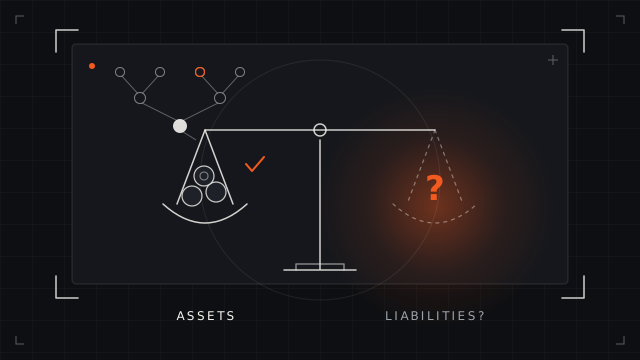
Exchange proof of reserves: what it proves — and what it doesn't
After FTX, every major exchange rushed out Merkle-tree attestations. Proof of reserves is real progress — and it still can't tell you the one thing you most want to know.
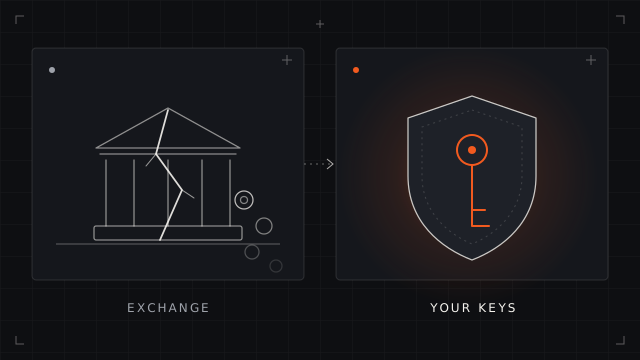
One year after FTX: what “not your keys” means in practice
FTX filed for bankruptcy in November 2022 holding billions in customer assets. A year on, the practical meaning of “not your keys, not your coins” — and what self-custody actually asks of you.
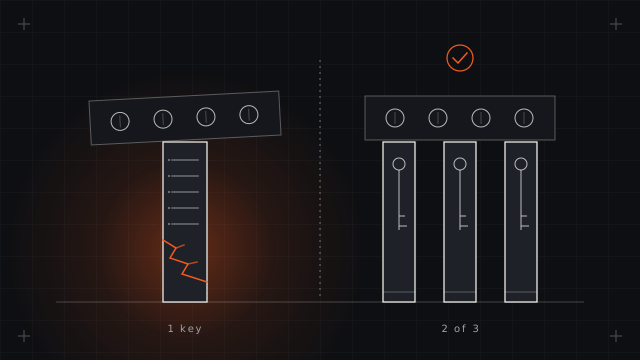
Your seed phrase is a single point of failure
Twelve words control everything you own — and anyone who finds them, or the one person who loses them, decides what happens next. Why single-key custody fails, and what replaces it.
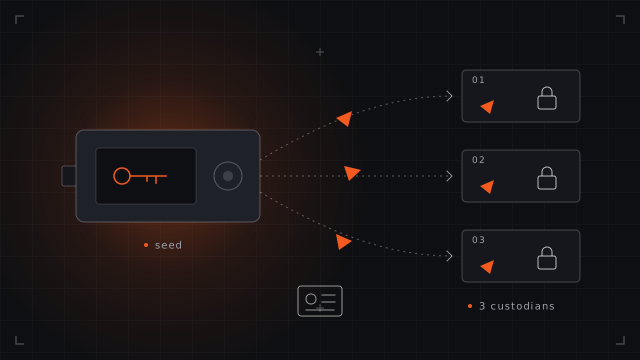
What the Ledger Recover backlash taught us about self-custody
In May 2023 Ledger announced an opt-in service that could extract encrypted seed shards from its secure element — and the community pushed back hard. What the episode really proved about trust.