
How do I recover MultiSig assets myself?
The security and availability of Ownbit MultiSig assets do not rely on the Ownbit server. Using the built-in Multisig Recovery Tool (which works even offline), the required participants can always recover their MultiSig funds — even if the Ownbit server were permanently down.
What you need
- The MultiSig mnemonics of at least the minimum required signers (e.g. 2 of the 3 in a 2-of-3).
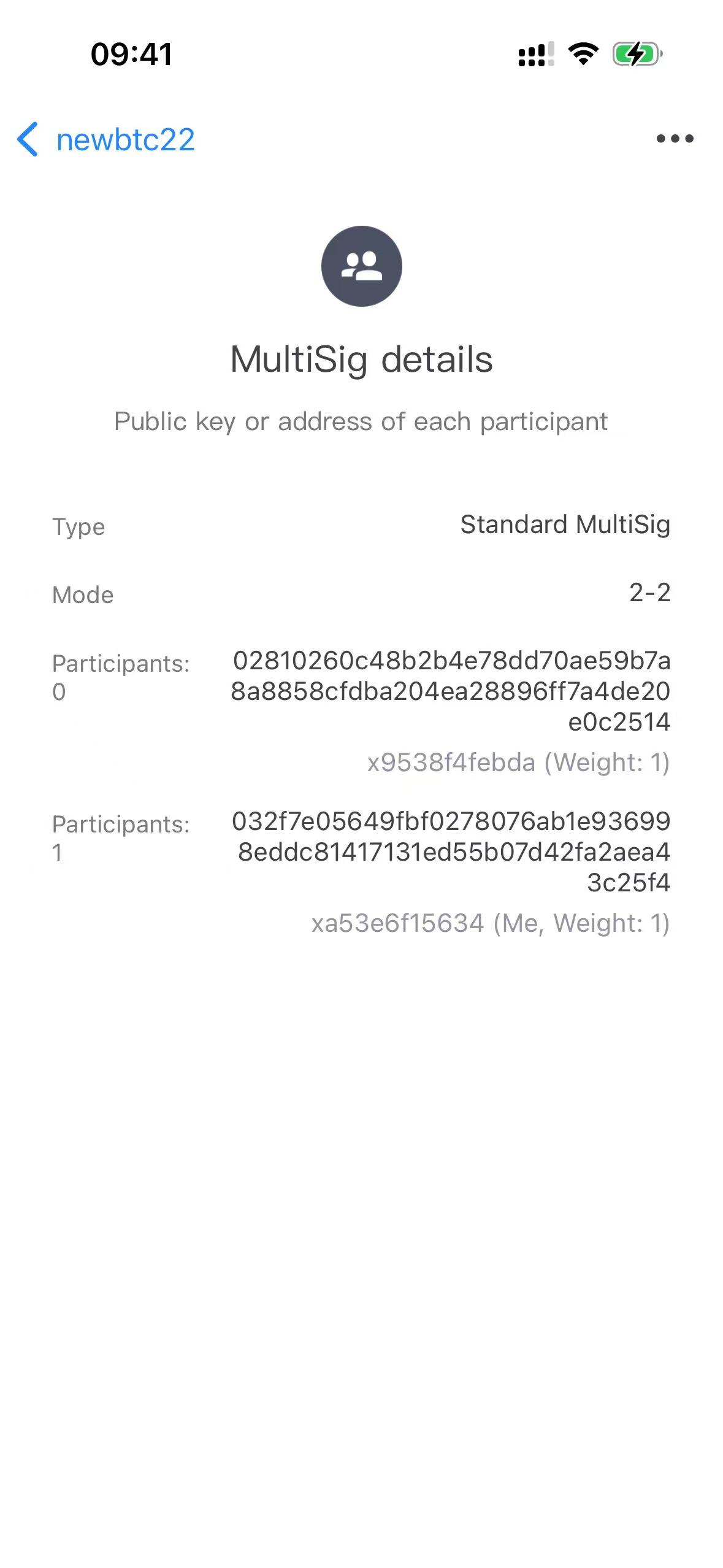
- Each participant's public key — shown on the MultiSig details page — to reconstruct the MultiSig.
- For UTXO chains, the available UTXOs of the MultiSig address (from any block explorer); for EVM chains, the MultiSig address and spend nonce.
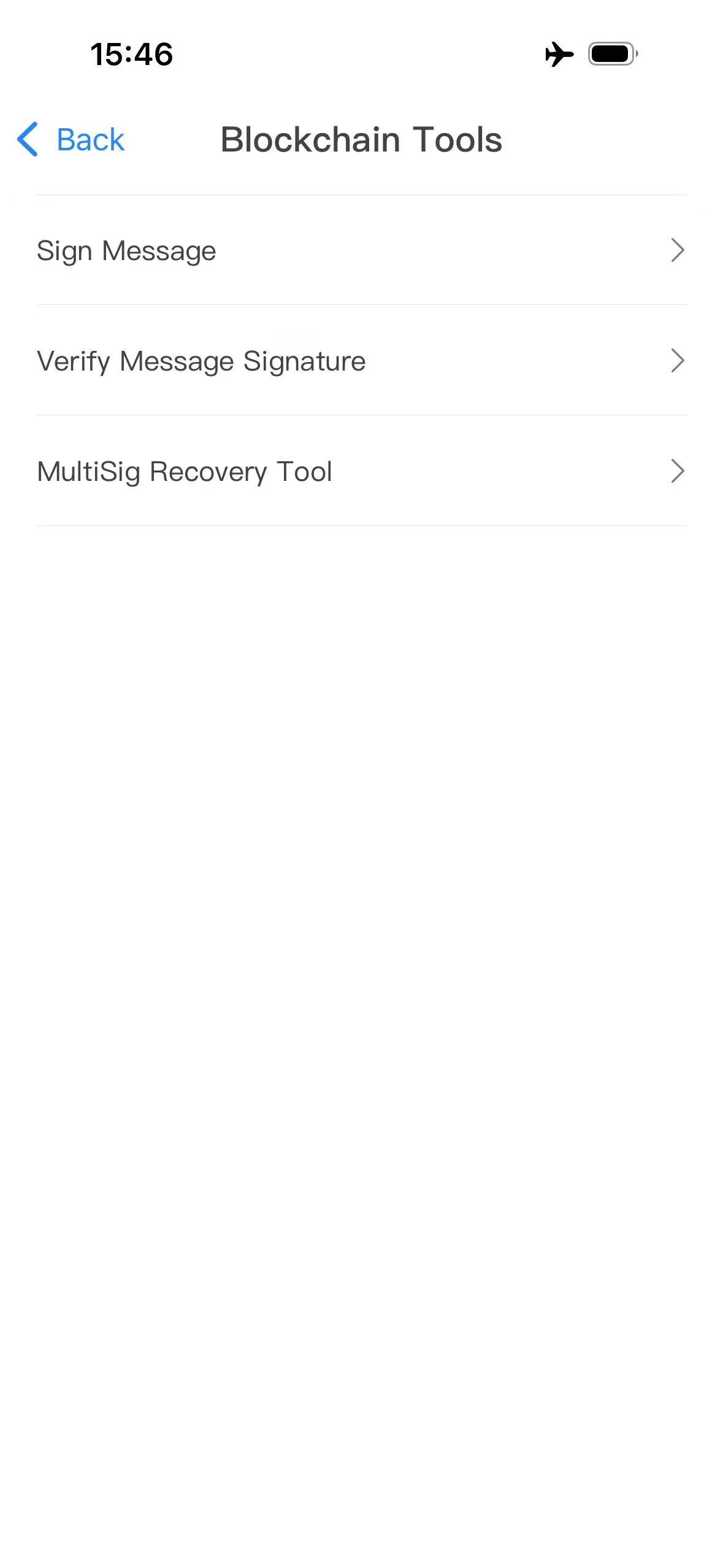
The Multisig Recovery Tool is at Home Menu → Blockchain Tools → Multisig Recovery Tool and works in a fully offline environment.
The general recovery flow
Open the Multisig Recovery Tool
On each required signer's phone, open Home Menu → Blockchain Tools → Multisig Recovery Tool and select the coin type.
Gather the pubkeys and parameters
Collect every participant's public key from the MultiSig details page; note the network, the minimum signers, and (per chain) the UTXOs or the spend nonce.
Each required signer produces a signature
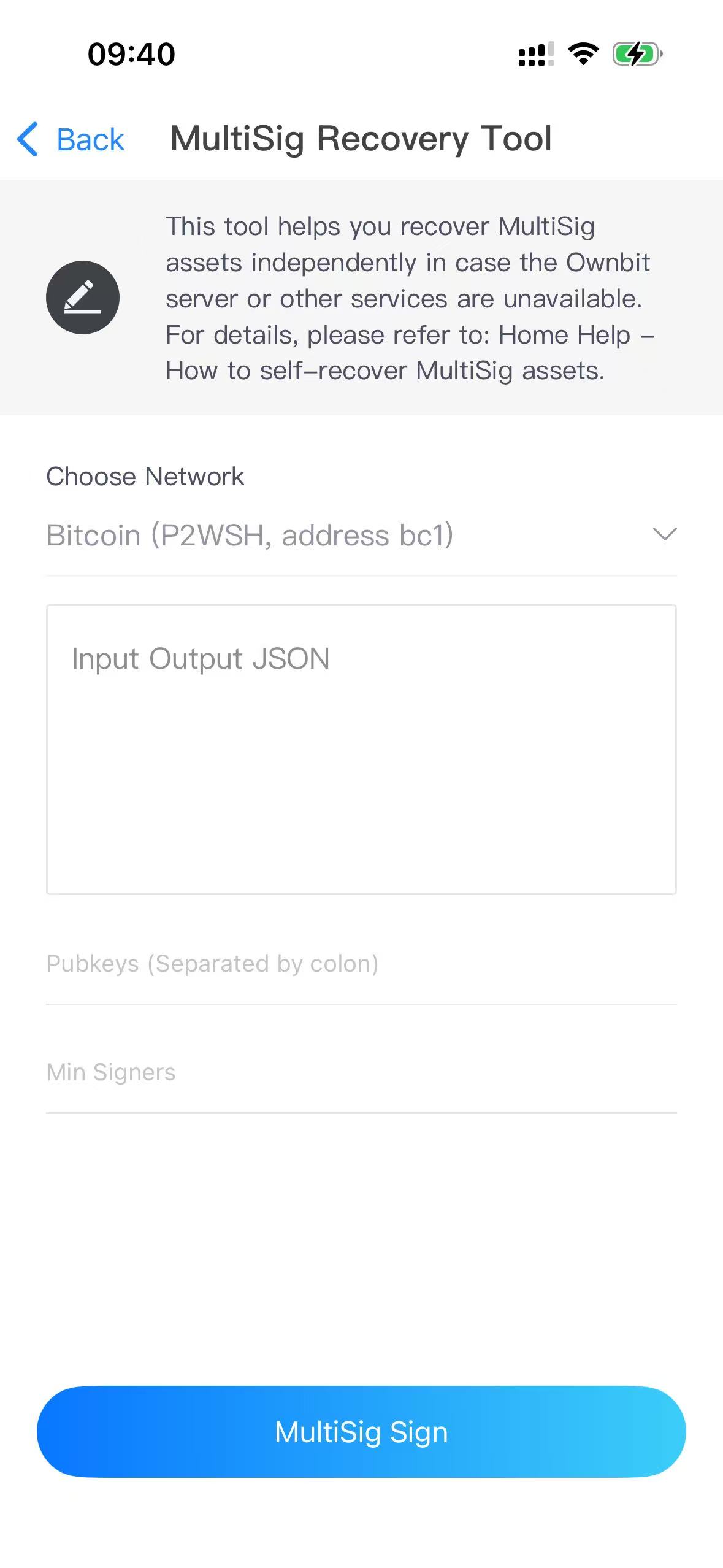
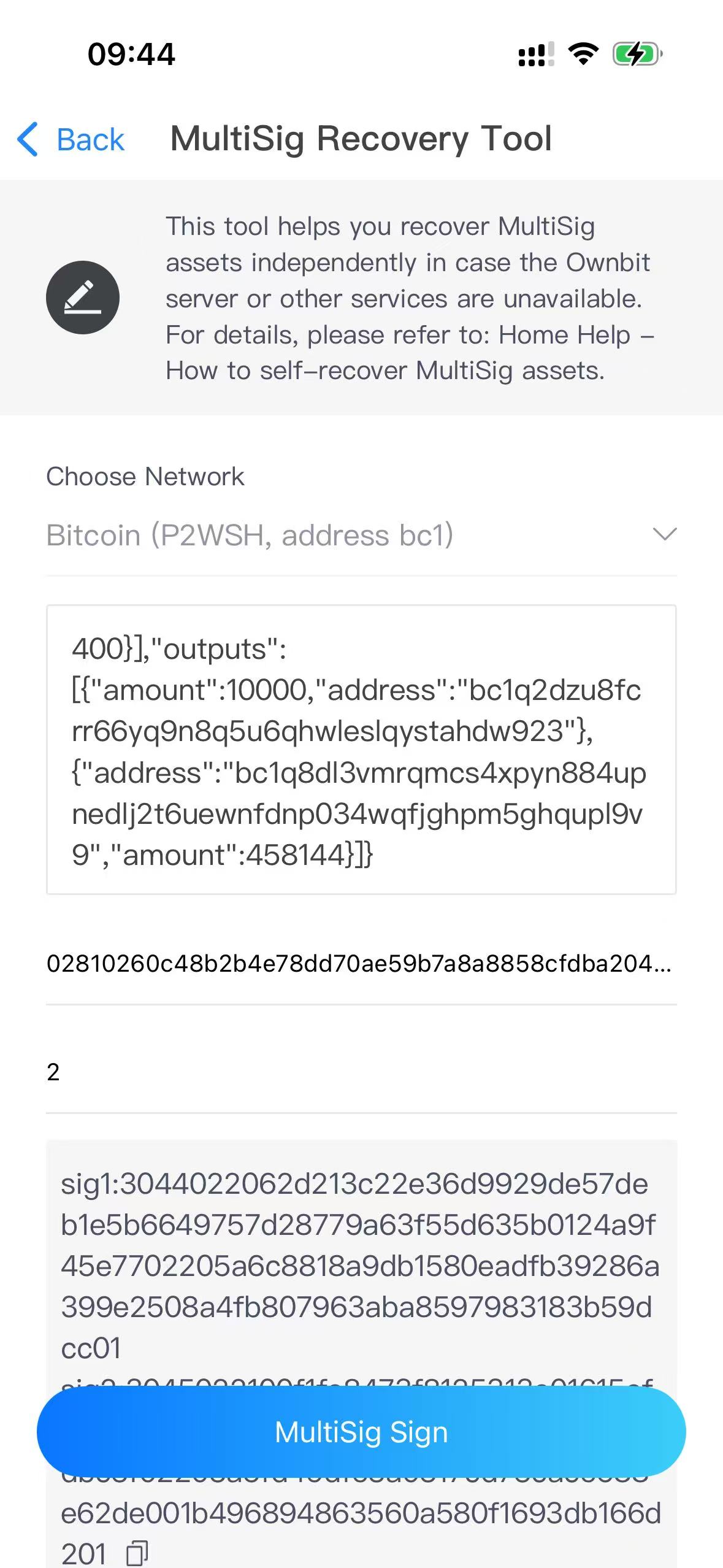
Every required signer enters the identical parameters and taps sign to produce their signature. Values entered by each signer must match exactly.
Assemble and broadcast
Combine the signatures into a final signed transaction and broadcast it to the network to spend the MultiSig funds.
Per-chain differences
- BTC and other UTXO chains (LTC, DOGE) — build an input/output JSON from the address's UTXOs, provide the colon-separated pubkeys and the min-signers, sign, then assemble the final hex and broadcast (e.g. via mempool.space).
- ETH / ERC20 / BSC / Base — provide the MultiSig address, destination, token contract (0x0 for native), decimals, amount and the spend nonce; each signer produces an (r, s, v) signature and you call the contract's spend method.
- TRON / Solana — follow the tool's per-chain fields; the flow mirrors the above.
This is a technical, developer-level process. For the full worked examples — the exact JSON, the transaction-assembly code and the broadcast commands — see the full guide: How to Recover Multisig Assets by Yourself.
Why this is possible without Ownbit
Ownbit MultiSig is decentralized: BTC uses standard P2SH (OP_CHECKMULTISIG) and EVM chains use a lightweight, open-source contract. Because the logic that governs funds is on-chain and public at github.com/bitbill/ownbit-multisig-contracts, the required signers can reconstruct and spend without any Ownbit server.
Frequently asked questions
Can I recover MultiSig funds if Ownbit disappears?
Yes. The Multisig Recovery Tool works offline and the contracts are public, so the required number of signers can always reconstruct and broadcast a spend without the Ownbit server.
How many signers are needed to recover?
At least the minimum threshold — for a 2-of-3, any two participants' mnemonics. Every required signer must enter identical parameters so their signatures combine.
Is this something a non-technical user can do?
The in-app tool handles signing, but assembling and broadcasting the final transaction is technical (especially on EVM/UTXO chains). Follow the full worked guide, or ask a technical person to help with the assembly step.
Last updated:
Download Ownbit
Install the app, then set up a cold wallet or MultiSig for the setup you need.